
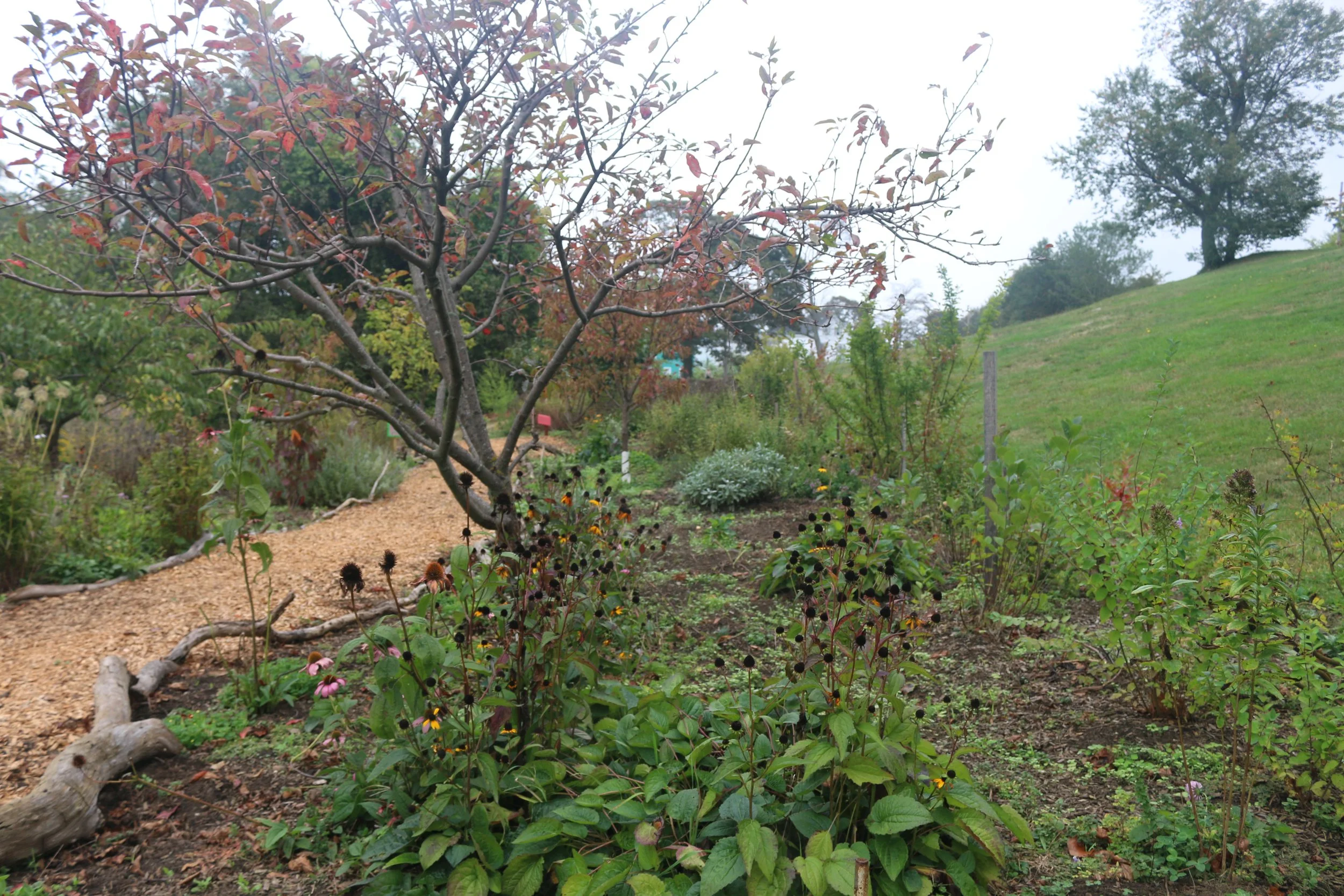
Peach Guild
Food
-
The common peach is a deciduous fruit tree in the rose family that is native to Asia and has many cultivars that provide excellent peaches or nectarines. While the fruit is edible the seeds and wilted leaves are poisonous especially if eaten in quantity.
-
Asparagus, in the Asparagaceae family, is a long-lived, herbaceous perennial vegetable that is not a native to the United States but to Europe, Africa, and Asia. However, it has naturalized in the United States and is often found along roadsides and ditches. The species epithet is Latin, meaning "of the offices," and indicates the plant was used in medicine and sold as an herb.
-
Sarvis holly is a large, deciduous, upright shrub or small tree native to the southeastern United States. This is a good choice for a rain garden, native garden, or winter garden. The fruit is a dull, velvety rosy red. For the plant to produce berries, you must have both a male and female plant of the same species.
-
Nannyberry is a native, suckering shrub in the Viburnaceae family and is adaptable to a wide range of sites. It can be grown as a shrub or small tree. Creamy white flowers in spring are showy as are the fruits in the fall which are edible. Fall color is orange to reds.
-
Perennial herb; leaves in basal clumps, large, with thick, reddish petiole, and large, heart-shaped, blades; flowers small, in a dense, elongated, terminal cluster; fruit 3-winged, reddish.
Supressor
Attractor
-
Black-eyed Susan is an erect herbaceous perennial in the daisy family (Asteraceae) and native to the eastern United States. The species epithet means "shining," referring to the glossy yellow ray florets.
-
Referring to the belief that comfrey helped to heal injuries, the scientific name Symphytum comes from the Greek words symphyo or grow together and phyton for plant. Together translating to a plant that heals injuries. It has a long history of use as a medicinal herb for topical and internal injuries, though it is no longer deemed as safe for consumption. It is said that the leaves and roots can be used to treat rashes, swelling, cuts and bruises.
-
Marigolds are a popular annual with colorful flowers that are easy to grow in average, moderately fertile, well-drained soils in full sun. Marigolds also do well with some shade during hot summers, but become leggy in too much shade. Flowers are edible and have a slightly bitter, tangy, peppery flavor They add color to salads and other dishes. Marigolds attract butterflies and are useful as cut flowers. The flowers make a beautiful yellow dye.
-
American elderberry is a woody, deciduous shrub or small tree that is native to North, Central and South America. Elderberry flowers and fruits are used in winemaking. Wildlife also enjoys the fruits, and the arching branches provide a habitat for nesting birds. Native bees nest in the dead, hollow stems.
Accumulator
-
Yarrow is an herbaceous perennial in the daisy family (Asteraceae) native to temperate regions of Europe, Asia and North America.It may be too weedy for flower bed borders and a cultivar is a better choice. Use this plant in naturalized settings, as a ground cover or a lawn alternative in low-foot traffic areas. They also make good cut and dried flowers and attract many pollinators. Avoid planting where your pets are and wear gloves to prevent contact dermatitis.
Mulchers
Fixer
-
Sage is a genus in the mint family (Lamiaceae). It has a worldwide distribution. There are over 1000 species and many more hybrids and cultivars. Most species have aromatic foliage, but the flowers lack fragrance. Several species are used as culinary herbs (sage, rosemary, pineapple sage), perfume (clary sage [Salvia sclarea]), and medicine (Salvia miltiorrhiza).